How to prove event ROI at account level, not lead level
A four-step method for the events you host, with the window, the baseline and the cost set before the first guest arrives.
By CordiallyPublished · 12 min read
The short answer
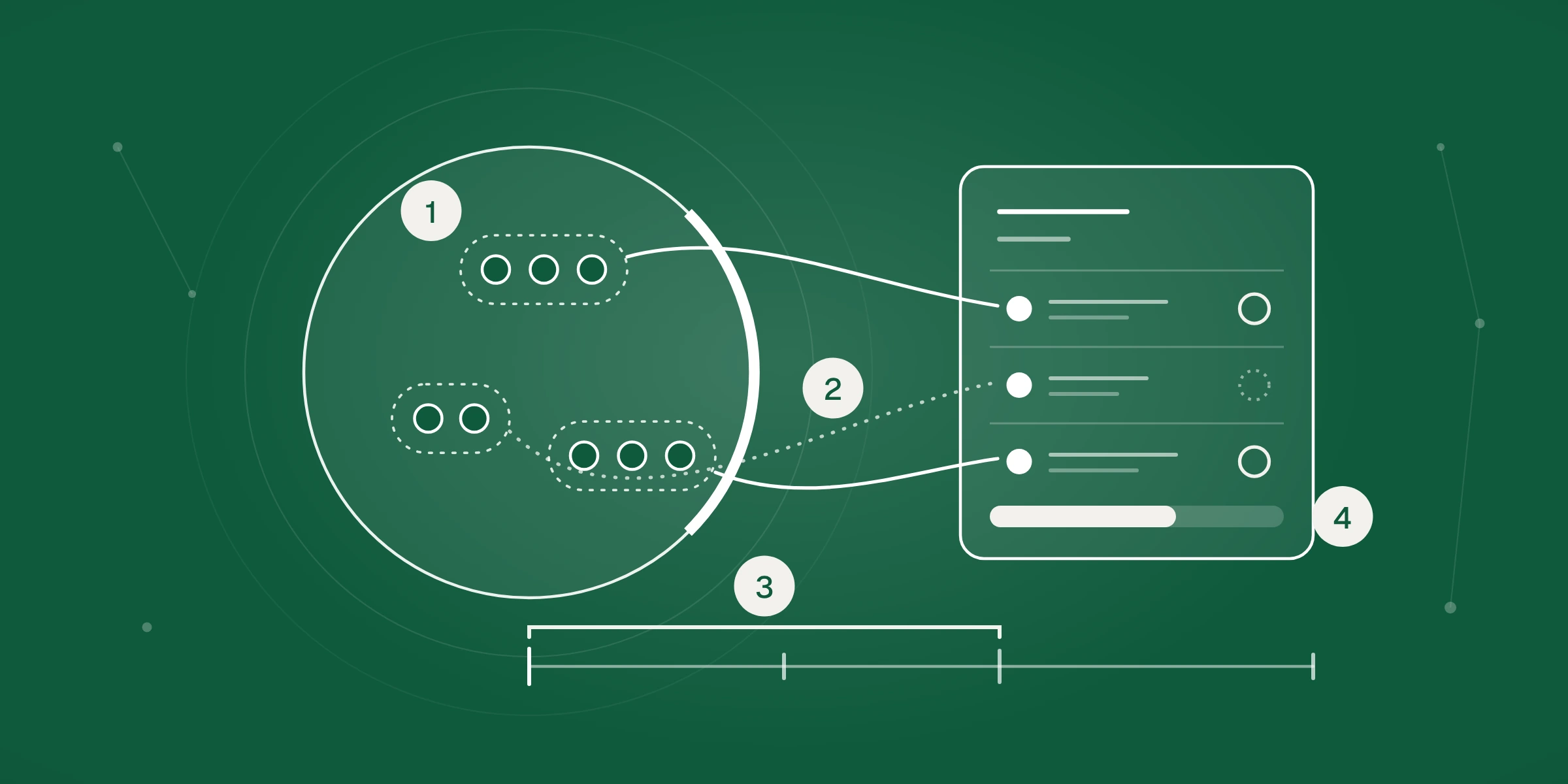
Account-level event ROI credits an event for the pipeline and revenue at the accounts that sent someone from the buying group, instead of only the leads your CRM can trace to a contact. Freeze the account list, record who attended and who met them, set the window before the event, divide by all-in cost, and show the lead-level number beside it.
What is account-level event ROI?
Account-level event ROI is the pipeline and closed-won revenue at accounts where someone from the buying group attended your event, inside a window you set in advance, measured against everything the event cost. Lead-level ROI asks which individual contacts the event touched. Account-level ROI asks which accounts the event reached.
Definition
The account ledger is one row per target account for one event. It records who from the account attended, who on your team met them and what was said, and the account's pipeline before and after the event, so every ROI claim can be checked account by account.
Vendelux, an event-intelligence vendor, describes the model as crediting "the event for any opportunity in any account where at least one decision-maker attended". It fits the events you host. A user conference or an executive dinner seats several people from one key account, and the deal that opens later rarely lists all of them.
An event you host for key accounts should be measured in accounts.
This guide covers the method. The mechanics of why a CRM report shows nothing are in why your CRM shows no event influence, and the four places pipeline leaks on the day are in the pipeline your team misses at your own events.
Why does lead-level ROI undercount events you host?
Lead-level ROI undercounts because your CRM credits a campaign through contacts attached to a deal, a buying group is larger than the contacts on any one deal, and some of the people you met were never entered. Each of the three removes credit before the report is built.
First, the rule. Salesforce states that its campaign influence models work this way:
“Influence models scan active campaigns to identify members who are also assigned a contact role on an open opportunity.”
HubSpot's rule is the same in kind: "For attribution, the deal must be associated with at least one influenced contact." Both CRMs credit people on the deal, and your event may have reached the account through other people.
Second, the size of the group. Forrester's Buyers' Journey Survey 2025 found that purchases involve more people than any deal record shows:
“73% of purchases involve three or more departments, with an average of 13 people inside the buyer's organization and nine from outside involved in making a purchase decision.”
Third, the gap in the data. Ebsta and Pavilion's 2025 GTM Benchmarks, built on 655,000 opportunities, found that 44% of the contacts sellers interact with aren't recorded in their CRM, and that a quarter of those are CxO, VP or Director level. The report describes selling in general, not events, and Ebsta sells revenue-intelligence software. Use it as a reason to check your own guest list against your contacts.
The cost of a lead-level number is a budget conversation you lose. In The CMO Survey's 2026 edition, 56% of marketing leaders said they feel increasing pressure from their CFO to prove the value of marketing, down from 63% in 2025. If the report credits your dinner with two leads and your CEO knows eleven executives came, you will be asked about the other nine.
How do vendors define sourced and influenced event pipeline?
Event-sourced pipeline is pipeline the event created, and event-influenced pipeline is pipeline the event touched along the way. The boundary between them is drawn differently by each vendor and each CRM, so write down your definitions before you report a number.
Vendelux puts it this way: "Event-sourced means the event created the opportunity, no prior pipeline existed." Its definition of influenced is that "the event appears somewhere in the multi-touch attribution path for an opportunity". We found no neutral standard behind either term, and the CRMs add their own rules on top.
| Method | What it credits | What it needs | Use it for |
|---|---|---|---|
| Event-sourced | Opportunities that did not exist before the event and were created from it | A record of the opportunity's origin, and a rule for what counts as new | The conservative number for finance |
| Event-influenced | Opportunities where the event appears anywhere in the path | Attendance recorded on contacts who are tied to the deal | The wider picture, labelled as influence |
| Campaign influence in the CRM | Deals with a campaign member who holds a contact role (Salesforce) or an associated influenced contact (HubSpot) | Guests entered as contacts and attached to the deal | An audit trail finance can check |
| Account-level | Opportunities at accounts where a decision-maker or buying-group member attended | A frozen account list, attendance by account and a window set in advance | Events you host, where several people per account attend |
Salesforce's default model adds a rule that trips up event teams. It "assigns 100% influence to the campaign noted in the Primary Campaign Source field" on the opportunity, so a webinar a guest joined after your dinner can take the credit. Account-level reporting does not replace that number. It sits beside it.
Some attribution tools already roll activity up to the account. Adobe's documentation for Marketo Measure says it "surfaces each touchpoint for each lead and contact under your accounts". If you own such a tool, use it for the touchpoints. You still need the ledger for what the touchpoints cannot show: who from your team met whom, and what was said.
How do you prove event ROI at account level? Four steps
Fix the account list, record the room account by account, set the window, then count against a baseline and the full cost. The first three happen before or during the event. Teams that decide them afterward are choosing the answer.
Leak 1: Fix the account list before the event
Write down the target accounts the event is for and freeze the list on the day invitations go out. Put each account on one row of the ledger with its owner, its open opportunities and its stage. The frozen list is what lets you say later that the event reached 18 of 40 target accounts rather than that it influenced whichever accounts turned out well. Accounts you add afterward go in a separate column, labelled as added.
Tier the list, because each tier asks a different question. Accounts with open deals ask whether the event moved them along. Accounts you are trying to open ask for new pipeline. Customers ask about renewal and expansion. Keep the tiers as separate row groups so a strong result in one cannot cover a weak result in another.
Leak 2: Record the room account by account
Attendance has to be written down on the day, by account. From check-in, record who arrived. During the event, record which teammate met which guest and what the guest said. Create every guest who is missing from the CRM as a contact within a day. If notes wait for the follow-up email, the ledger becomes an attendance list with a revenue number attached.
Record status honestly. Salesforce's documentation says Customizable Campaign Influence "considers every campaign member, regardless of their member status", so an invited guest and an attended guest look the same to the report unless you clean the list. The ledger keeps invited, registered, attended and met as separate columns.
If the notes wait for the follow-up email, the ledger is an attendance list with a revenue number attached.
Leak 3: Set the window and disclose it
Choose how long after the event you will count deals, and state it in the report. Vendelux recommends a 180-day lag for revenue in its ROEI formula, "closed-won revenue attributed to the event, lagged 180 days" divided by total all-in event spend, and says a 30-day window almost always understates the program. It calls 365 days harder to defend operationally. These are one vendor's recommendations, and we found no independent benchmark for how long an event takes to produce a deal.
So treat 60, 180 and 365 days as reporting checkpoints and not as a norm. Set the main window before the event, in writing, and show the other checkpoints beside it as they arrive. A window chosen after you have seen the deals is the first thing a skeptical CFO will ask about.
Leak 4: Count against a baseline and the full cost
Count pipeline and revenue at the accounts that attended, split into three groups: opportunities created inside the window, opportunities that were already open before the event, and revenue closed inside the window. Opportunities that existed before the event are influenced at most. Putting them in the sourced column is the quickest way to lose finance's trust.
Add a comparison group. The accounts you invited that did not attend show what the same list does without the event. It is not a controlled experiment, because the accounts that say yes are often warmer, so label the comparison as a reference and not as proof of cause. Then divide by all-in cost: venue, food, travel, speakers, agency fees, swag and the hours your own team spent. Leaving out staff time makes the ROI look better than it is.
What should the account-level report show?
It should show the ledger itself, six numbers drawn from it, and the window and definitions in plain words at the top. The ledger makes every total auditable, because a reader can pick any account and see who attended, who met them and what was counted.
| Account | Attended | Met by | Open deals before | Counted as |
|---|---|---|---|---|
| Account A | VP of Operations, Director of IT | AE and CSM, same day | One at proposal stage | Influenced, listed with the deal |
| Account B | Head of Finance | Nobody from the team | None | Reached, not covered; follow up and note the gap |
| Account C | Invited, did not attend | Not applicable | None | Comparison group |
- Accounts reached: target accounts with at least one attendee, over the frozen list.
- Accounts covered: reached accounts where someone on your team spoke to a guest and wrote it down.
- Event-sourced pipeline: opportunities created inside the window at reached accounts, under your stated rule for new.
- Event-influenced pipeline: opportunities already open at reached accounts, reported on its own line.
- Closed-won revenue in the window, and the same figure at the longer checkpoints as they arrive.
- Cost per account reached, from all-in cost over accounts reached.
Report two ratios and label each. Return on event spend is closed-won revenue in the window divided by all-in cost, the shape of Vendelux's ROEI. Pipeline per dollar is event-sourced pipeline divided by the same cost. Revenue is slow and pipeline arrives sooner, so the second figure is the one you can show a quarter after the event, with the first following at the 180-day checkpoint.
Report accounts covered next to accounts reached. The gap between them is the part of the event your team can still change, and no other metric in the report points at something you can act on before the next event.
How do you present it to finance?
Lead with the conservative number, show the wider one beside it, and state what neither proves. Finance trusts a report that says where it is weak. Show event-sourced pipeline and closed-won revenue first, account-level influence second, and the lead-level CRM figure third, because it is the number they can reproduce.
Say what the method does not show. Account-level credit is an association. A VP who attended may already have been in the final stage, so the event may have changed nothing about that deal. Open deals before the event, the comparison group and the stated window are how you show you did not hide that.
Event teams share the problem. Bizzabo's 2026 trends post, drawn from its State of Events report, says "In 2026, 40% of organizers report difficulty proving event ROI, compared to 70% in 2025." Bizzabo does not publish the sample size or fielding for that comparison, so treat the two years as separate surveys, not a trend. What it supports is narrow: proving event ROI is still hard for a large share of organizers.
Where does account-level measurement go wrong?
It goes wrong when the list, the window or the credit rules move after the results are known. Five mistakes show up most often, and each one is cheap to avoid.
- Moving the account list. Adding accounts that turned out well makes every number look better and none of them true.
- Counting invited accounts as reached. Reached means someone attended, and the CRM may not tell the difference.
- Calling open deals sourced. If an opportunity existed before the event, the event did not create it.
- Stacking events. An account that came to your summit and your dinner has two events claiming one deal. Report each event's ledger, then say in one line which deals appear in both.
- Leaving out staff time. The hours your field team spends are a cost of the event.
Each fix is a rule written down before the results come in. Rules written afterward draw the same questions from finance, and you have no answer to them.
Does account-level measurement work at events you don't host?
It works only as far as you know who was there. At a sponsored trade show you are one booth among hundreds and usually get no attendee list, so the method falls back to the people who stopped by and the accounts they belong to. That is lead capture, and a different job. At an event you host, you wrote the guest list and ran check-in, which is why the ledger can be complete and why this guide keeps to those events.
Where does Cordially fit?
The ledger is only as good as what gets written on the day, and the day is when nobody has time to write. Cordially Agents start from your guest list and check-in, record which teammate met which guest at each key account and what was said, and update your CRM with each conversation tagged to the event. That gives the ledger its attended, met-by and what-was-said columns without a spreadsheet passed around after the event. Every message an agent drafts to a guest is approved by a named teammate before it sends.
Frequently asked questions
What is account-level event ROI?
Account-level event ROI is the pipeline and closed-won revenue at accounts where someone from the buying group attended your event, inside a window you set in advance, measured against the event's all-in cost. It credits the account instead of the individual contact, which suits events where several people from one account attend.
What is the difference between lead-level and account-level event attribution?
Lead-level attribution credits an event only through individual contacts tied to a deal. Account-level attribution credits it for opportunities at any account where a decision-maker or buying-group member attended. The second catches deals where the guests were not the people attached to the opportunity, so report both side by side.
How long after an event should I count revenue?
Set the window before the event and state it in the report. Vendelux recommends a 180-day lag for revenue and says a 30-day window almost always understates an event. We found no independent benchmark, so treat 60, 180 and 365 days as reporting checkpoints and show them as they arrive.
Should open deals count as event-sourced pipeline?
No. If an opportunity existed before the event, the event did not create it. Report those deals as influenced, on their own line, and count as sourced only the opportunities created inside your window under a rule for what counts as new. Finance trusts the report that keeps those lines apart.
What do I record at a user conference or dinner to measure account-level ROI?
Record who from each target account attended, which teammate met them, what they said, and any new contact you had to create. Do it on the day, from check-in, and keep invited, registered, attended and met as separate statuses. Add the account's open deals before the event so a baseline exists.
Does account-level attribution prove the event caused the deal?
No. It shows an association between attendance and pipeline at an account. Accounts that attend are often warmer, and an attendee may already have been late in the deal. A comparison group of invited accounts that did not attend, and a stated window, show you did not hide that limit.
Sources
Every number in this guide comes from the sources below, checked against the source itself on the date shown. Cordially has no customer outcome data yet, so none is used.
- How to Measure Event Marketing ROI in 2026Vendelux (Stefan Deeran), May 27, 2026Used for: ROEI as closed-won revenue lagged 180 days over all-in spend; the 180-day recommendation and its view of 30 and 365 days; the definitions of event-sourced and event-influenced; account-level attribution as crediting any opportunity at an account where a decision-maker attended (vendor guidance, no sample)Checked October 11, 2026
- How Customizable Campaign Influence WorksSalesforce HelpUsed for: Influence needs a campaign member with a contact role on an open opportunity; every member counts regardless of status; the Primary Campaign Source model gives 100% to that campaign (the page shows no date)Checked October 11, 2026
- Analyze individual campaign performanceHubSpot Knowledge Base, August 3, 2026Used for: A deal must be associated with at least one influenced contact for campaign attributionChecked October 11, 2026
- Account-Based AttributionAdobe Experience League, Marketo Measure documentation, October 7, 2026Used for: Marketo Measure surfaces each touchpoint for each lead and contact under an account (the page says it was last updated 2026-10-07)Checked October 11, 2026
- Three Realities About B2B Buying NetworksForrester, February 23, 2026Used for: 73% of purchases involve three or more departments; an average of 13 people inside the buyer and nine outside (Buyers' Journey Survey 2025; the post states no sample size)Checked October 11, 2026
- GTM Benchmarks Report 2025Ebsta and Pavilion, 2025Used for: 44% of the contacts sellers interact with aren't recorded in their CRM, and a quarter of those are CxO, VP or Director level (655,000 opportunities; Ebsta sells revenue-intelligence software; selling in general, not events)Checked October 11, 2026
- The CMO Survey: Highlights and Insights Report, 2026The CMO Survey (Duke Fuqua School of Business, Deloitte, American Marketing Association), April 15, 2026Used for: 56% of marketing leaders report increasing pressure from the CFO to prove the value of marketing, against 63% in 2025 (35th edition, 308 U.S. marketing leaders, fielded January 7 to 29, 2026; slide 45)Checked October 11, 2026
- Event Industry Trends 2026: What Event Professionals Are ReportingBizzabo (Kerri Moore), February 18, 2026Used for: 40% of organizers report difficulty proving event ROI, compared to 70% in 2025 (the post states no sample size; Bizzabo sells event software)Checked October 11, 2026
Revision history
- : First published.